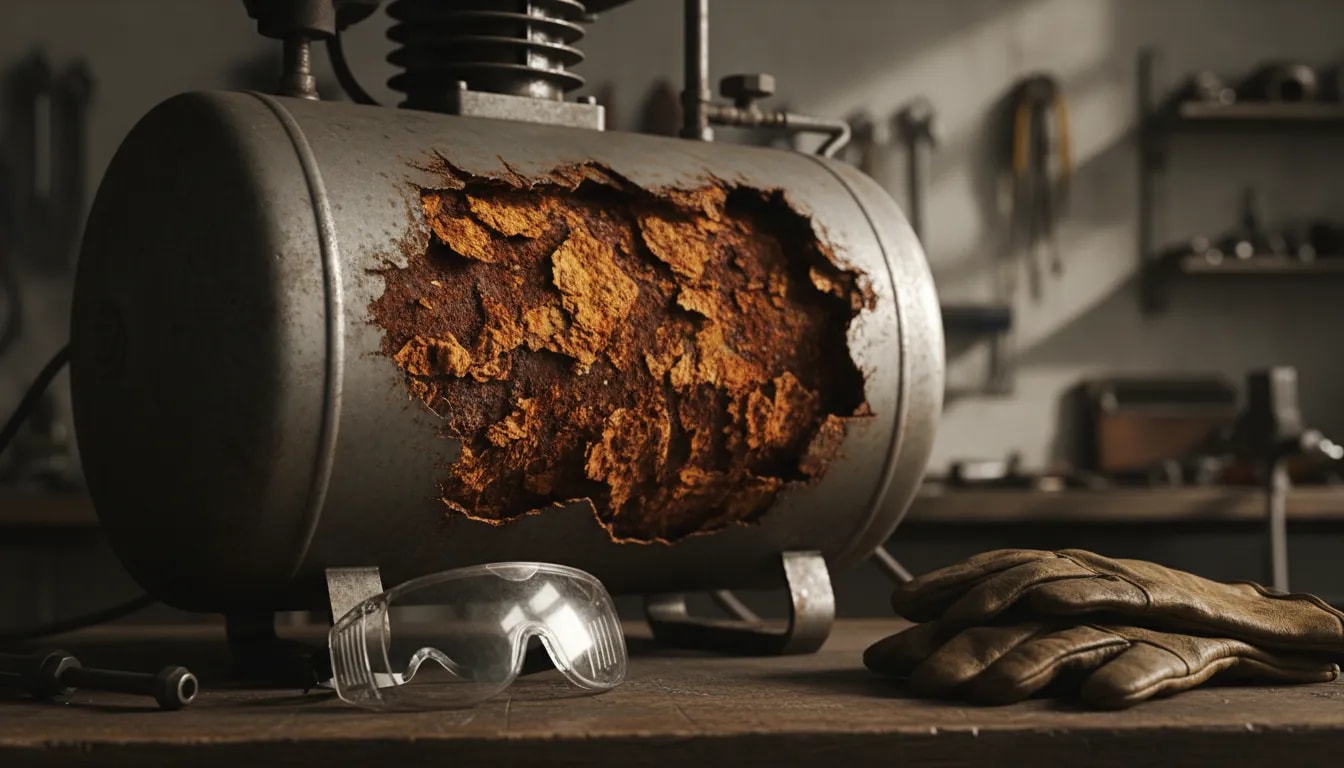

If you have an old Compressor sitting in the workshop, especially one that has been around for years quietly doing its job, it is worth asking a slightly uncomfortable question: what does the inside of the tank actually look like?
Mine had been with me for about 20 years and had started leaking rusty water from one of the welds. That is never a reassuring sign. A bit of rust on the outside is one thing. Rusty water coming out of the tank is quite another. So rather than guessing, I decided to do the obvious home workshop thing and cut the tank open to see what horrors were lurking inside.
What I found was unpleasant, fascinating, and a useful reminder that a Compressor tank can hide a remarkable amount of corrosion where you cannot see it.
Why I Cut the Compressor Tank Open
A Compressor tank is one of those bits of kit people tend not to think about too much. You plug it in, it makes air, and that is that. But the tank is doing a fairly serious job. It is storing compressed air, and any moisture in that air eventually condenses inside the vessel.
If that moisture is not drained regularly, it sits in the bottom of the tank and starts doing what water and bare steel always do. Over time, you get corrosion. In my case, the first obvious warning was rusty water leaking from a weld.
At that point, there was only one sensible thing to do. Retire the tank and have a proper look inside.
Stripping the Compressor Down
The first job was to liberate the tank from the rest of the machine. All the fittings, brackets, and useful odds and ends came off first. As with most workshop jobs, anything still decent gets saved and put in the stash for some future project. It is practically the law.
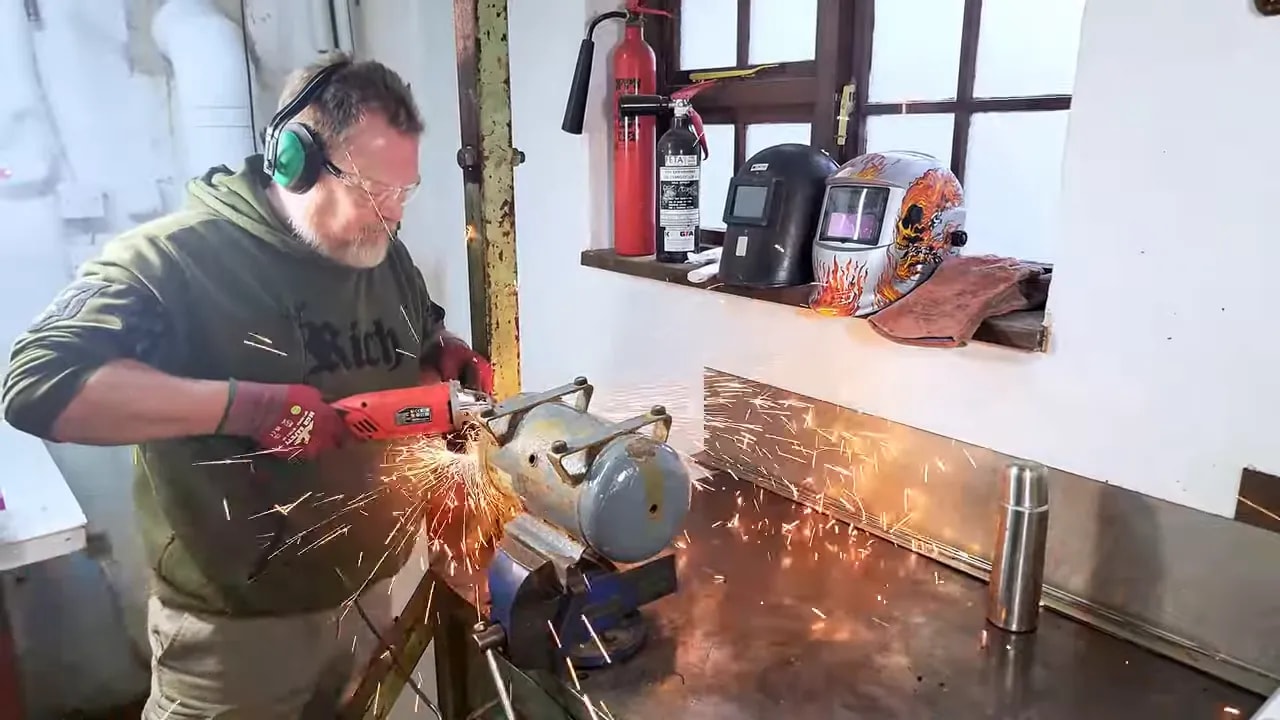
Once the tank was on its own, it went over to the grinding bench to be cut in half. That was really the only way to answer the question properly. Looking through drain holes and ports only tells you so much. If you want to know the true state of an old Compressor tank, cutting it open removes all doubt.
Opening It Up
After a fair bit of cutting, the tank finally split into two halves. And then came the moment of truth.
It was awful.
The inside was absolutely full of what can best be described as rusty goo. Not dry rust scale, not a light dusting of corrosion, but a thick muddy sludge. Proper nasty stuff. The sort of thing that makes you wonder how long it had been building up in there and how much metal it had quietly consumed in the process.
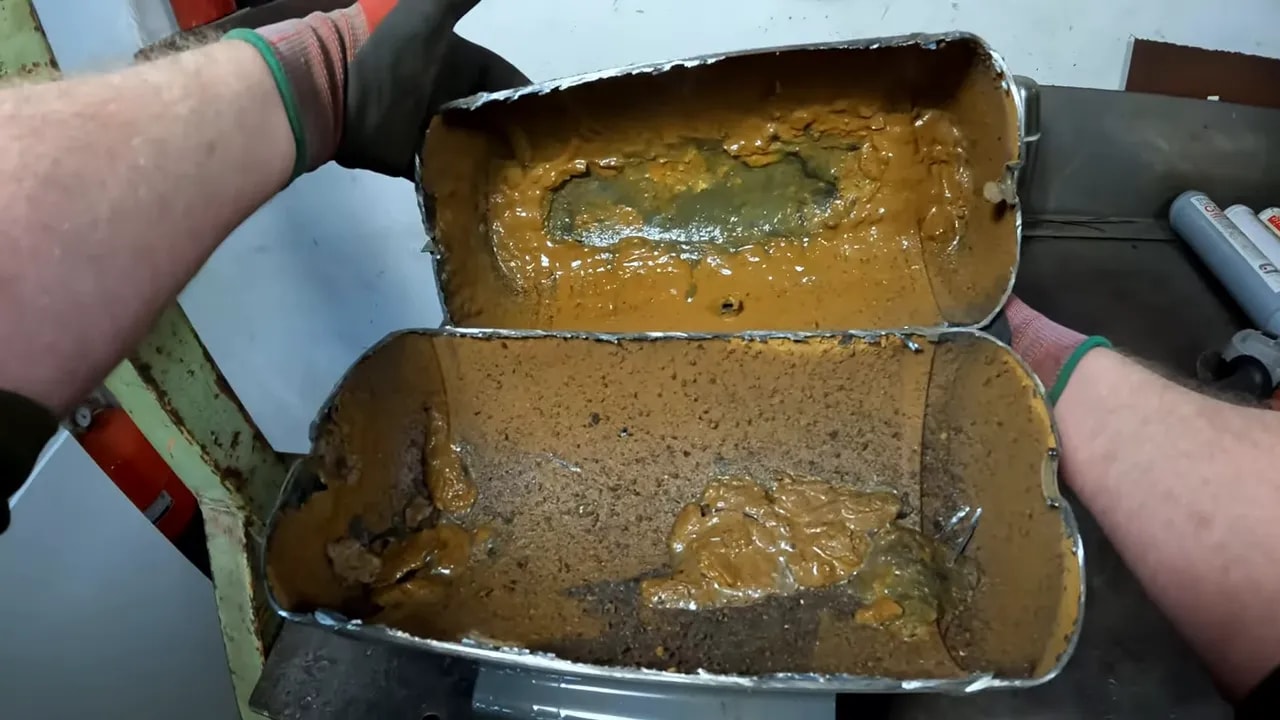
One thing that did stand out, though, was the thickness of the steel. The tank wall looked to be around 1.5 to 2 mm thick, which was more than I had expected. That was actually reassuring in one sense, because it suggested the tank had been reasonably well made to begin with.
Even so, good original material only gets you so far if the inside spends years bathing in condensation.
What Was Inside the Compressor Tank?
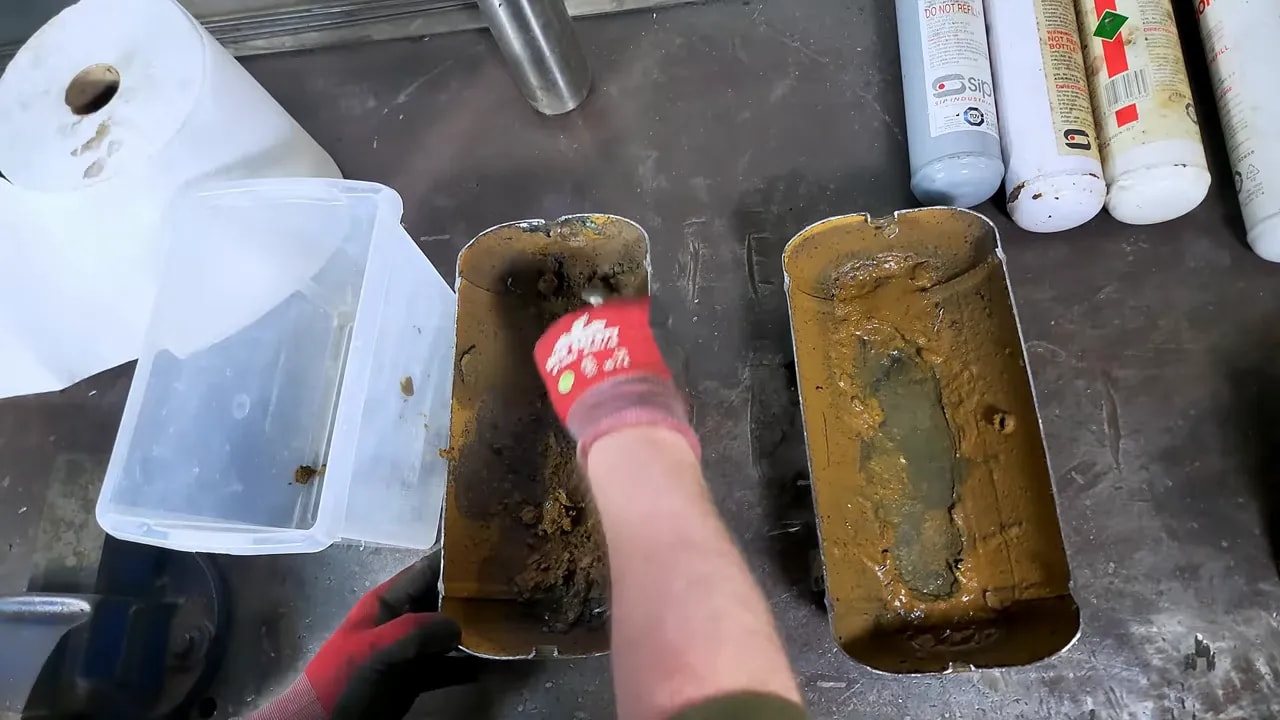
Once the first shock wore off, the next step was to start clearing the muck out and see what lay underneath. The sludge was thick, solid in places, and very much like rusty mud. It was not just staining. It had body to it.
Poking through it with a bit of scrap metal was enough to show just how unpleasant it was. This was years of condensed water, rust, and debris compacted together into something halfway between slurry and compost.
The areas of greatest concern were exactly where you would expect them to be:
-
The bottom of the tank, where water naturally settles.
-
The region around the legs and welds, where the leak had appeared.
-
Any seams or transitions, where corrosion can get a foothold.
There was one section in particular that looked decidedly iffy. A solid fragment appeared to have broken away, likely from around the base where the leak had been. The inner surface should have been smooth. Instead, there were ridges, scabs, and rough raised areas suggesting the metal had been eaten away unevenly.
Cleaning Back to Bare Metal
To get a proper sense of the damage, I cleaned the inside back as far as possible. Burrs from the cut edges needed removing first just to make the thing safe to handle. After that it was a matter of scraping, wire brushing, and using brake cleaner to shift the remaining muck.
This was one of those moments where a sandblasting cabinet would have been very handy indeed. A wire brush and cleaner will get you part of the way, but heavy internal corrosion is stubborn stuff.
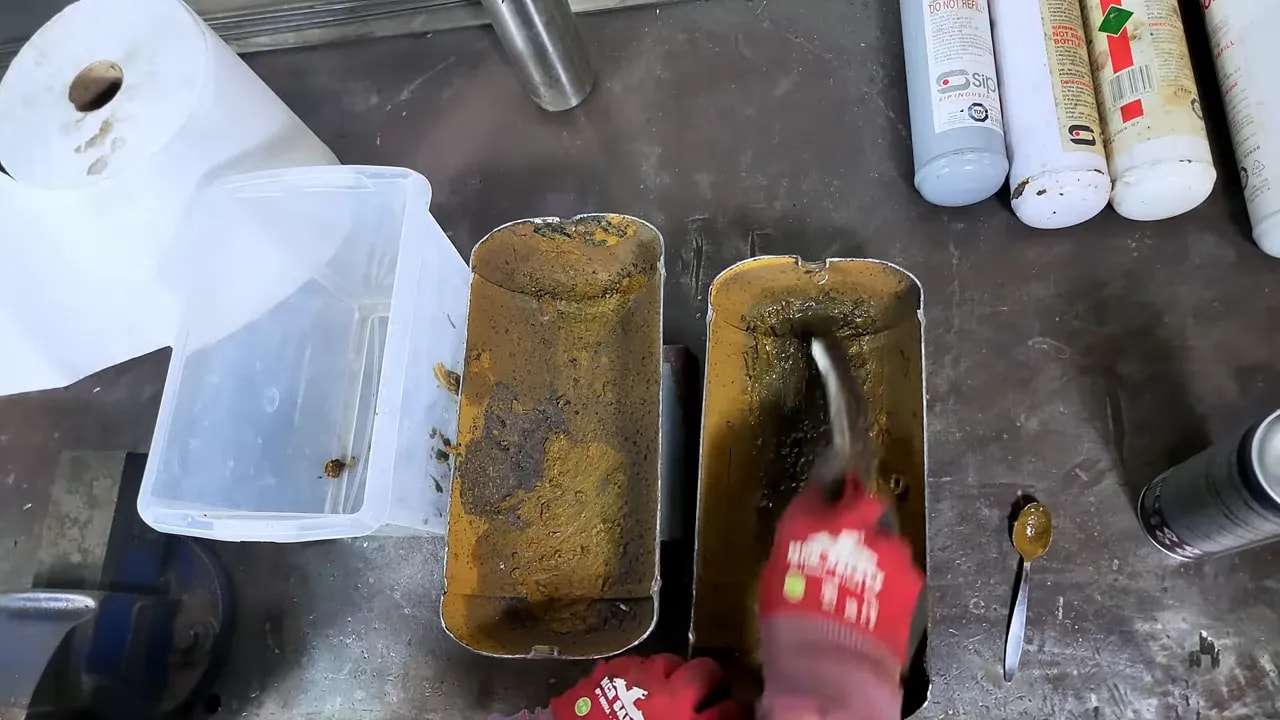
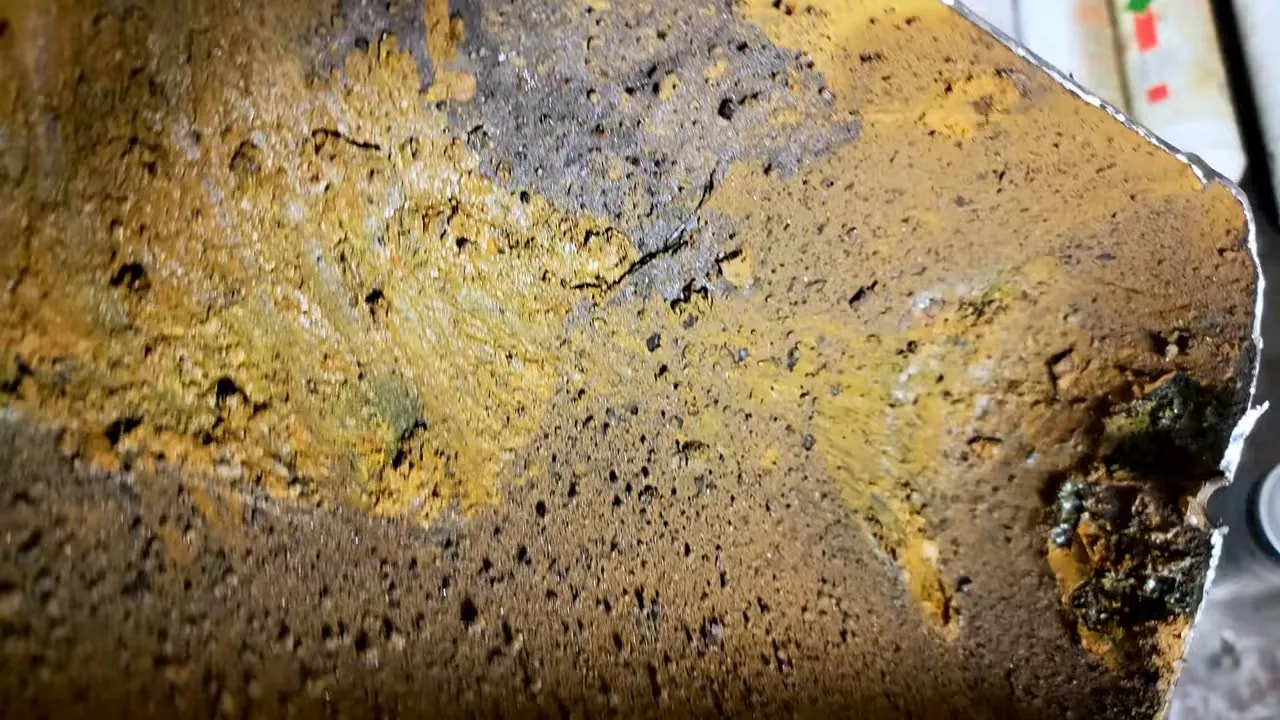
Even after cleaning, the bottom section still looked rough. Very rough. The metal was heavily pitted and scabbed, with obvious signs of material loss. Although I could not see daylight through it, which would have confirmed a full perforation, that did not make it healthy. Far from it.
What the Corrosion Really Looked Like
Once more of the sludge was cleared away, the true state of the tank became easier to judge. The steel underneath was pitted all over in places, particularly in the bottom section where the water must have sat for years.
There were a few important observations:
-
The shell had not obviously rusted right through in the cleaned areas I checked against the light.
-
The pitting was severe, especially near the lower areas.
-
The seams and end cap welds looked thick and substantial, suggesting the original construction was decent.
-
The worst area appeared to be near the legs and lower weld region, which tied in with where rusty water had been leaking.
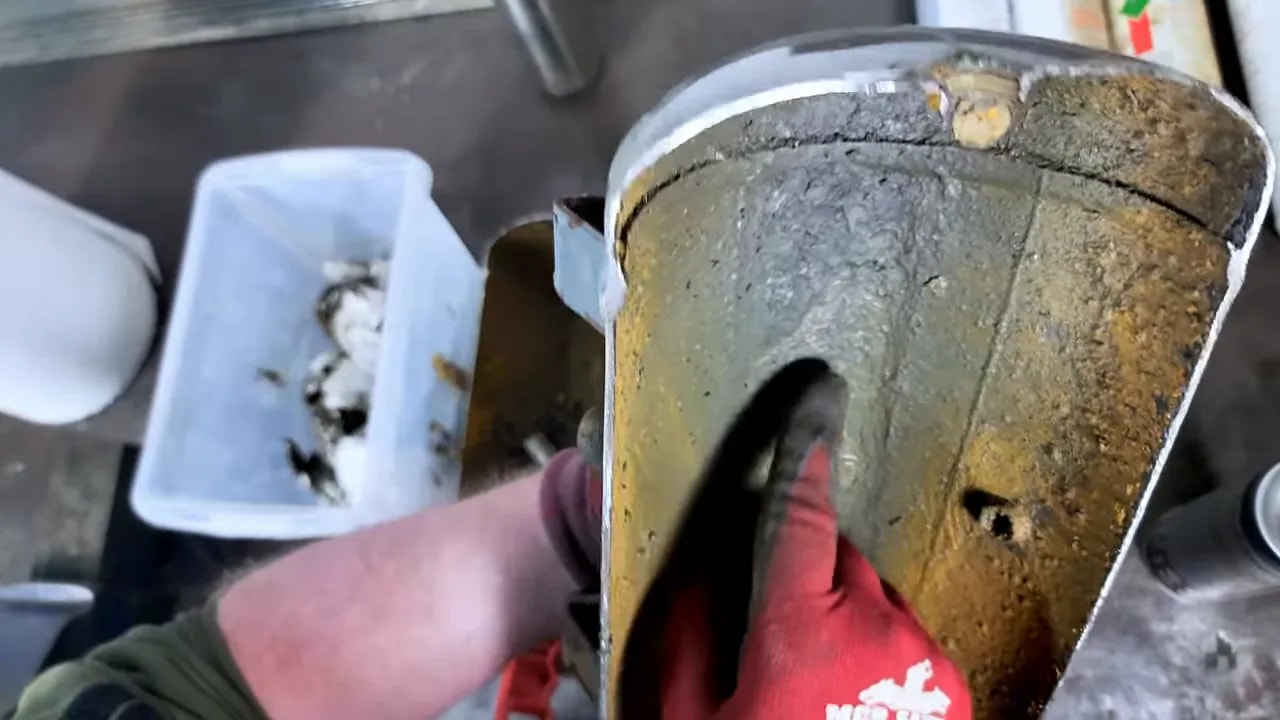
One particularly nasty patch showed deep pitting that had not yet eaten right through, but it was getting uncomfortably close. You could see that the metal had been attacked badly enough to leave a rough cratered surface. It had clearly seen much better days.
And that is really the key point. A Compressor tank does not have to be fully perforated to be worrying. Once corrosion gets established and the steel starts thinning in localised areas, you are relying on damaged metal to hold pressure.
What This Tells Us About an Old Compressor
The big lesson here is not that every old Compressor is about to explode. It is that the inside condition can be far worse than the outside suggests.
You can have a tank that still looks fairly ordinary from the outside, perhaps a bit scruffy, perhaps a little surface rust here and there, while the inside contains years of damp sludge and some very unhealthy pitting.
In my case, the tank had lasted a long time, which says something positive about its original build quality. But 20 years is 20 years. Moisture, neglect, and time do not do pressure vessels any favours.
How to Look After a Compressor Tank Properly
If there is a practical takeaway from cutting open this Compressor, it is this:
-
Drain the tank regularly. At least once a week is a sensible rule of thumb.
-
Pay attention to rusty water. If water coming out looks dirty or rusty, do not ignore it.
-
Treat leaks around welds seriously. That is not just a nuisance leak. It can be a warning sign of internal corrosion.
-
Be realistic about age. If your Compressor is around 10 years old or more, it is worth thinking carefully about its condition and whether replacement is the wiser option.
None of this is especially glamorous, but it is the sort of routine maintenance that matters. Compressed air is incredibly useful in a workshop. It is also something worth respecting.
The Bottom Line
Cutting this old Compressor tank open answered the question thoroughly. Inside, it was full of thick rusty sludge, heavily corroded in the bottom, and badly pitted in places, particularly around the lower regions where water had sat over the years.
It had not obviously rusted clean through everywhere, and the tank itself was made from thicker steel than I had expected, but it was still in no fit state to trust. The leak had been a warning, and the inside confirmed it.
So if you have an ageing Compressor in the corner of the shed and you have not drained it in a while, now might be a good time. Because the outside only tells part of the story, and you really do not know what horrors lurk within.