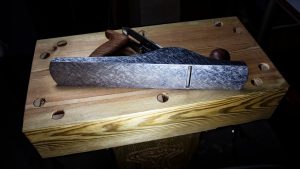
Flattening a Wood Plane Sole is one of those subjects that seems to attract a surprising amount of firm opinion. Ask whether you should flatten a plane with the iron fitted or removed, and you will usually get two confident answers that completely disagree with each other.
The common claim goes like this: if you flatten the sole with the iron and internals removed, then once you refit the iron, lever cap and the rest, the casting may distort slightly and the sole will no longer be as flat as you thought. On that basis, some say you should always do your Flattening a Wood Plane Sole work with the internals installed.
I used to lean that way myself. It sounds plausible enough. But plausible is not the same as true, and this is exactly the sort of thing that can be checked properly rather than repeated forever as workshop folklore.
The Question Worth Testing
The aim here was simple: take a few planes that were already very flat with the irons out, refit the irons, then measure whether the sole shape actually changes.
Not guess. Not squint at a straightedge and declare victory. Properly measure it.
For this little myth-busting exercise, I used three planes:
- A Stanley Handyman No. 4
- A Record No. 4
- A Stanley No. 5 jack plane
These were checked using precision engineering methods down to a few ten-thousandths of an inch. That level of precision is not because a woodworking plane needs to be that perfect in normal use. It plainly does not.
In fact, it is worth keeping some perspective here. Even high-quality plane makers such as Lie-Nielsen work to tolerances around one and a half thousandths of an inch. So if we are looking at tenths of a thousandth, that is simply to make the test sensitive enough to show whether anything changes at all.
This is not an argument that every plane needs obsessive scraping and metrology. It is just a good way of settling the question.
How the Flatness Was Checked
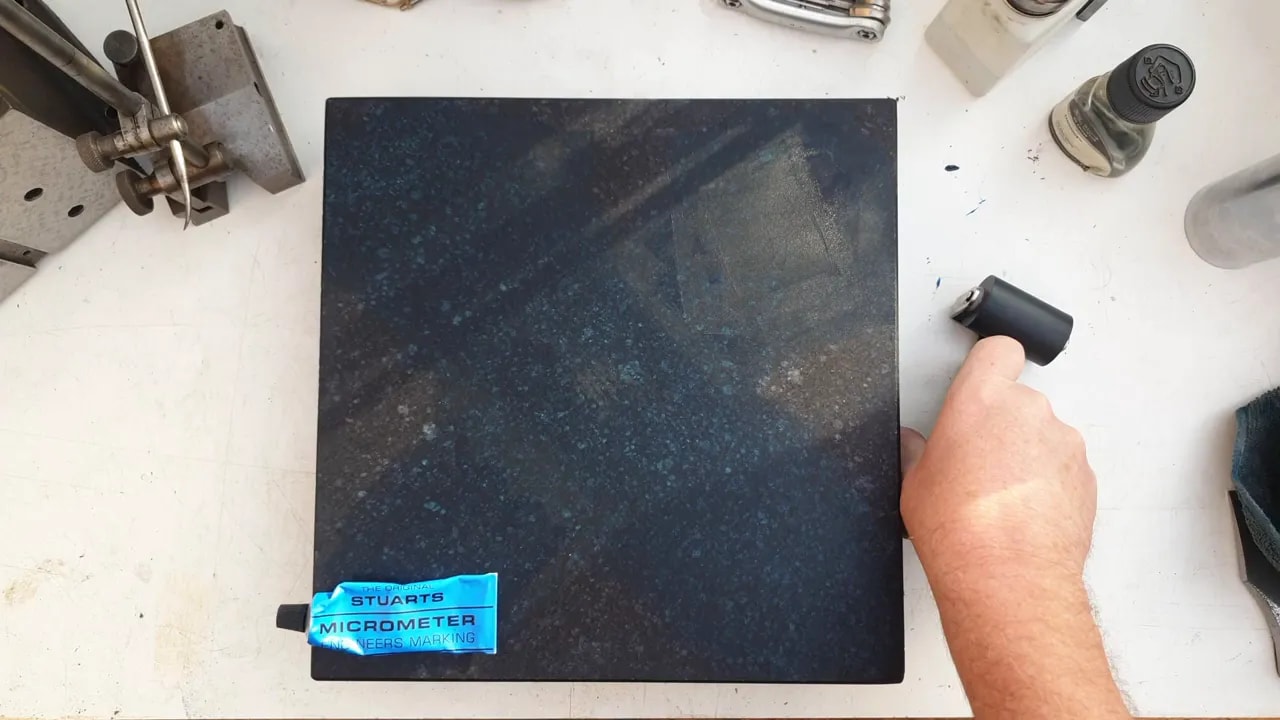
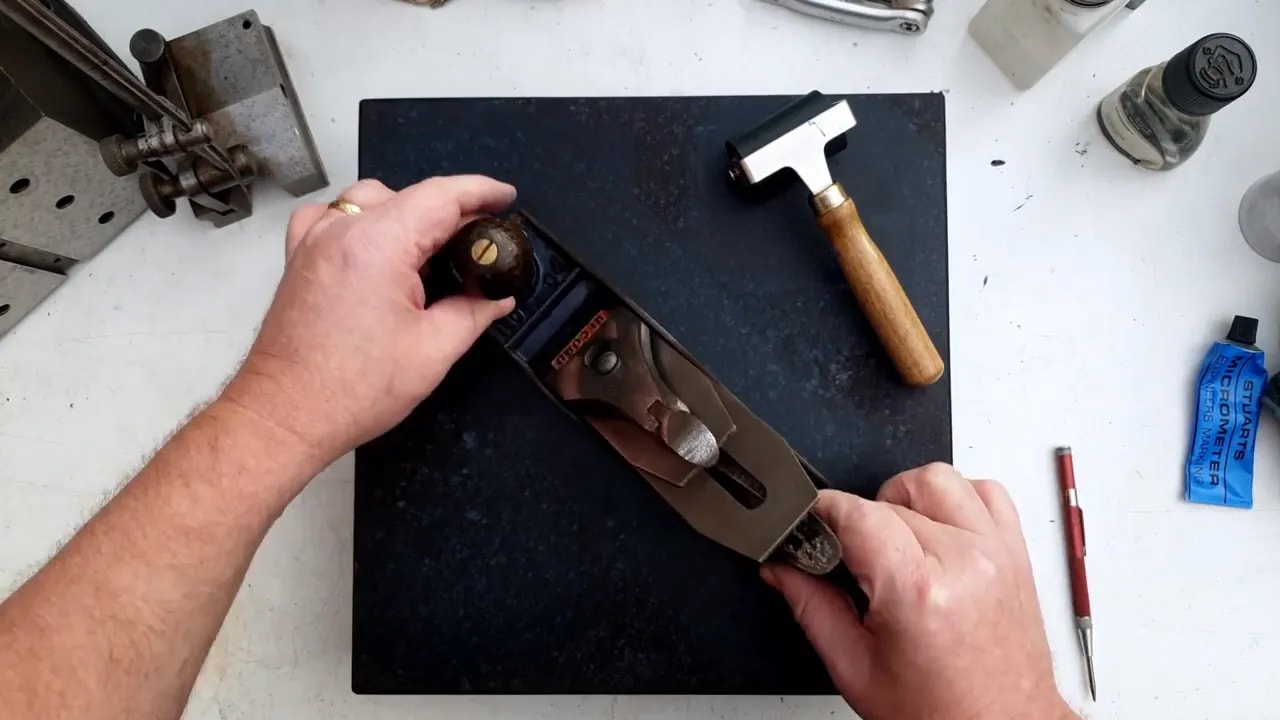
The method used was engineer’s marking blue on a precision surface plate.
A very thin coat of blue is rolled onto the surface plate, which itself is flat to around a ten-thousandth of an inch. The plane sole is then rubbed gently over the plate and lifted away. Wherever the sole touches the plate, it picks up blue.
This gives a contact pattern that tells you an enormous amount.
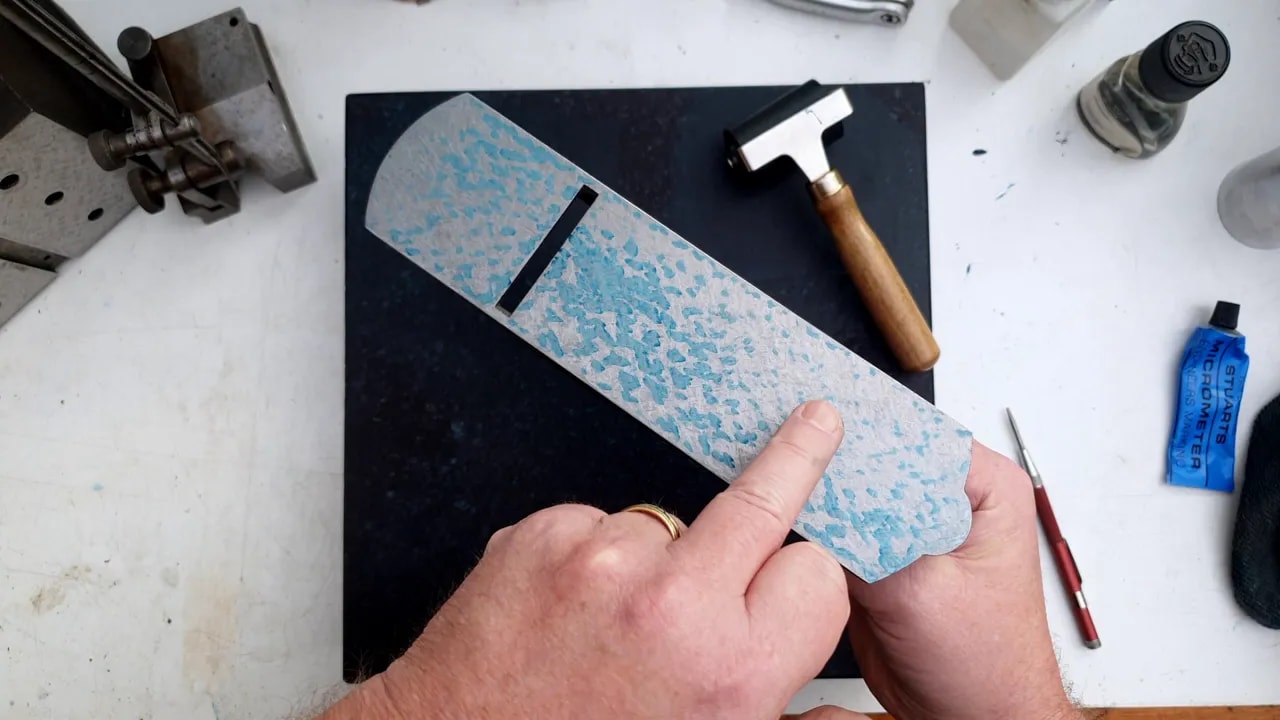
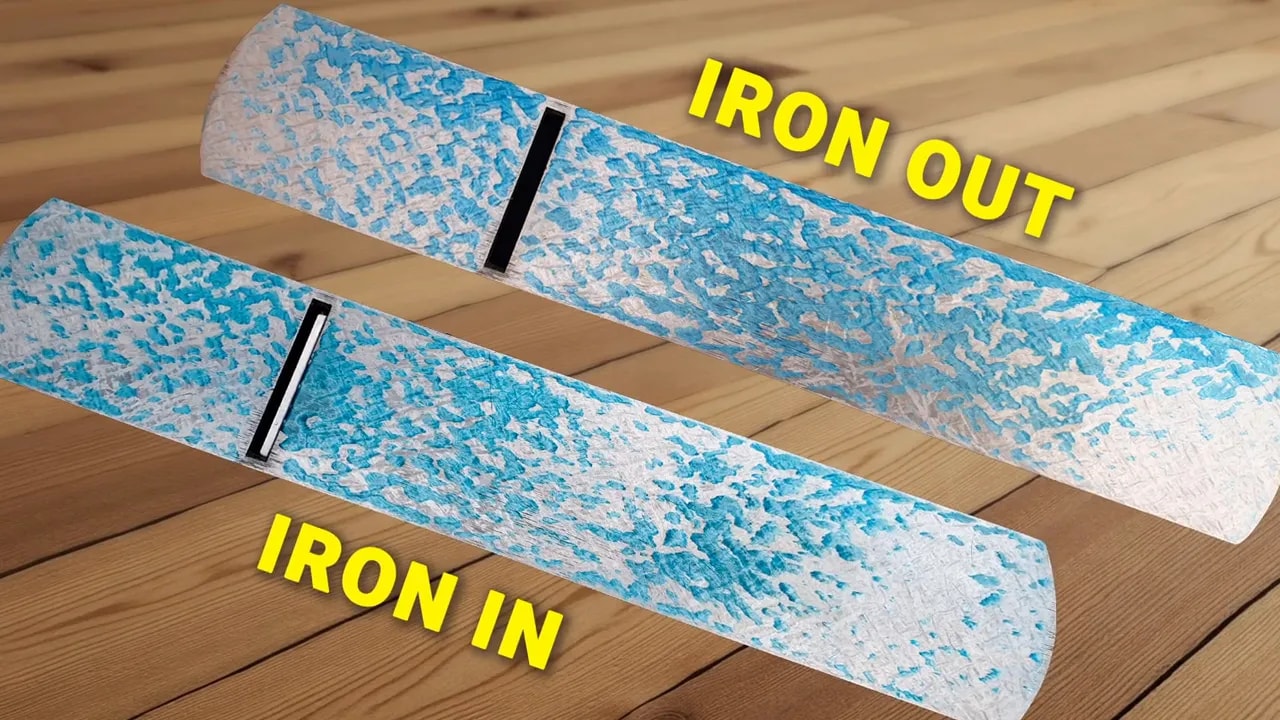
- Blue areas show where the sole is contacting the plate
- Bright metal areas are slightly lower spots that did not pick up blue
- A mottled pattern of blue dots across the surface shows the plane is very close to flat overall
When done properly, anything showing blue is within roughly one or two ten-thousandths of an inch of the plate. Even the unblued areas may still only be a few ten-thousandths away. So this is a very fine-grained way of checking Flattening Wood Plane Sole results.
The important thing was not whether each sole was mathematically perfect. The important thing was whether the pattern changed once the iron went back in.
A Quick Word on Interpreting Blue
Blueing parts up on a surface plate is not quite as fool-proof as people sometimes imagine. It is wonderfully revealing, but there is a bit of an art to it.
The thickness of the blue matters. Dust matters. How evenly the blue is rolled out matters. Even tiny specks can throw things off when you are dealing in ten-thousandths of an inch.
So when comparing before and after patterns, you have to be sensible. You are looking for a meaningful change in shape, not panicking because one pass picked up slightly more colour than another.
Plane One: Stanley Handyman No. 4
The first plane was an old Stanley Handyman No. 4, one of Stanley’s budget models. A bit rough and ready, though already cleaned up and flattened by scraping.
Before refitting the iron, the sole showed a good blue pattern overall. There was a slightly lighter area, indicating a very slight low spot, but there were still blue dots through it. In other words, it was already very flat and making contact where it ought to.
The sole was cleaned, the iron and internals were refitted, and the lever cap was tightened to what I would call a medium tension. That point matters because if lever cap pressure were going to distort anything, over-tightening would be the obvious culprit.
After rechecking on the surface plate, the result was essentially unchanged.
The same lighter patch was still there, the same contact pattern remained over the rest of the sole, and there was no sign that the body had bent in any meaningful way. Certainly not by enough to matter, and not even by enough to clearly show up as a different shape at this level of measurement.
Verdict on the Stanley Handyman No. 4: myth busted.
Plane Two: Record No. 4
The Record No. 4 started with an even, consistent pattern of blue contact over the sole. Again, there were blue dots all over the working surface, which is exactly what you want to see.
The iron was fitted, the sole cleaned, and the plane was re-indicated on the surface plate.
The result this time was even more straightforward: basically no difference at all.
The second blueing happened to transfer a slightly thicker layer of blue, but that is not unusual. The amount of blue you get on the sole depends heavily on how the plate has been reloaded. What matters is the contact pattern, and that pattern was effectively the same.
There may have been the tiniest hint of a difference near one area, but we are talking about fractions of a thousandth of an inch. Nothing remotely like a sole bending out of flat.
Verdict on the Record No. 4: myth busted again.
Plane Three: Stanley No. 5 Jack Plane
The Stanley No. 5 was the longest plane of the three, and in some ways the most interesting.
The initial contact pattern showed a slight low area at the back, though there were still little spots of blue there, meaning it was making contact in places. Again, this was not a dramatic defect. It was still only within a few ten-thousandths of an inch.
That is an important point with Flattening a Wood Plane Sole: people often imagine that any tiny patch of missing blue means disaster. It does not. What matters is whether the sole shape is suitable for use and whether it remains stable.
After the iron was refitted, the first re-blue looked a bit different. There appeared to be a heavier contact area behind the mouth, a slightly lighter area at the front, and more blue at the back than before.
At first glance, you might think that suggested a small change in shape.
But this is exactly where experience with surface plate work matters. I was not entirely satisfied with that imprint, so the plate was cleaned fully, fresh blue was applied, and the plane was checked again.
The second reading was much more consistent with the original pattern. Once the blue intensity was more comparable, the apparent difference largely disappeared.
That is a useful reminder that the measuring process itself can introduce noise. Too much blue, too little blue, uneven rolling, or a bit of contamination can all create misleading patterns, especially when you are examining extremely small differences.
Even allowing for the slight variations seen on the No. 5, the sole had certainly not warped enough to cause any practical problem whatsoever.
Verdict on the Stanley No. 5: also busted.
What This Means for Flattening Wood Plane Sole
Across all three planes, the conclusion was pretty clear: Flattening a Wood Plane Sole with the iron out gave the same practical result as checking it with the iron back in.
To be careful and fair about it, three planes do not prove a universal law. If even one of them had bent noticeably after the iron was fitted, that would show the effect is real and worth worrying about. But in these three examples, there was no meaningful distortion at all.
Logically, that makes sense too. The way the iron, cap iron and lever cap fit into a typical Bailey-pattern style plane does not strongly suggest that they ought to bend the sole if the casting is sound. And in these tests, they did not.
So if you have flattened a sole with the internals removed and are now fretting that putting everything back together has undone your work, there is some reassuring evidence here that this is very unlikely to be a problem.
Important Caveats
A few sensible caveats are worth keeping in mind.
1. This does not mean every plane on earth behaves identically
Three examples are encouraging, not absolute proof. Different castings, damage, manufacturing defects, or extreme clamping pressure could in theory produce a different result.
2. Lever cap tension could matter if taken to extremes
I used ordinary working tension, not some heroic amount of force. If someone winds a lever cap down like they are trying to crush the plane into submission, all bets are off.
3. Tiny visible differences are not automatically meaningful
With blueing, a slight change in colour density does not necessarily mean the metal has changed shape. You have to distinguish between a real geometric change and a variation in the transfer process.
4. Woodworking tolerances are not metrology-lab tolerances
This whole test was done at a much finer level than a plane typically needs in service. So even the tiny variations seen on the larger plane were still far below the point where they would cause practical trouble.
The Practical Takeaway
If you are working on Flattening a Wood Plane Sole, the main takeaway is pleasantly boring: fitting the iron afterwards is very unlikely to ruin the job.
That is actually rather good news. It means you do not need to lose sleep over whether all your previous flattening work was done under the wrong condition. It also means that if flattening with the iron removed is more convenient for cleaning, scraping or handling the plane, there is little reason to think you are making a serious mistake.
For these three planes at least:
- The Stanley Handyman No. 4 stayed effectively the same
- The Record No. 4 stayed effectively the same
- The Stanley No. 5 showed only minute, practically irrelevant variation
So as far as I am concerned, the claim that refitting the iron will bend the sole enough to matter has not held up here.
A Reassuring Result for Anyone With a Box of Old Planes
I must admit, I was rather relieved by the outcome. The last thing I wanted was to discover that after spending ages flattening these planes with the irons out, I ought to go back and do the lot again.
Thankfully, that does not appear to be the case.
If you enjoy fettling old tools and occasionally disappear into the workshop to chase this sort of detail, it is nice when a bit of careful measurement saves you from unnecessary extra work. That is one of the pleasures of mixing woodworking with a bit of engineering practice. You can stop guessing and simply check.
And in this case, the check suggests the old advice about always flattening with the iron fitted is, at the very least, far less important than many people make out.
Now flattening with the frog in or out, that’s another article for another day…